
Andrews County Court Records After a Jail Arrest
After an Andrews County arrest, the jail record and the court record are connected but not interchangeable. Booking at Andrews County Jail, operated by the Andrews County Sheriff's Office, creates a custody record. The formal court record starts when a complaint, information, indictment, citation, or other charging document is filed with the proper court. The County/District Attorney's Office can file a charge that matches the booking label, change the charge, reject the case, reduce an offense, add another count, or present a felony matter to a grand jury.
Use jail inmate records when the question is whether someone is in Andrews County custody, whether booking is complete, or whether a jail hold or release status exists. Use jail roster mugshots only for booking-photo questions, with the caution that no official Andrews County source confirmed public mugshots in the Tyler portal during research. Court records after an arrest answer a different question: what formal charge was filed, which court has the case, whether bond conditions changed, and what disposition later appears.
The local prosecution page identifies Sean Galloway as County Attorney and lists the County/District Attorney's Office at 121 NW Avenue A, Andrews, TX 79714, phone 432-524-1405, fax 432-524-5839. The District Clerk page lists Sherry Dushane at 201 N Main, Room 102, Andrews, TX 79714, phone 432-524-1417. Those offices matter because the prosecutor controls charging decisions and the clerk route is where felony or district-court records should be verified.
How to Find Andrews County Court Records After an Arrest
The first practical step is to confirm that the arrest became an Andrews County booking. The county sheriff's helpful links include the official Tyler/Odyssey PublicAccess portal labeled "Search Jail Records," but command-line inspection during research could not confirm court-search fields, defendant-search fields, or a visible criminal case profile. Use the fields shown by the live Tyler page if it opens in a browser session, and avoid assuming that a jail search result is also the complete court docket.
- Start with the official Andrews County Sheriff's Office page and its quick links rather than third-party roster pages.
- Open the Tyler/Odyssey PublicAccess jail-records link and use the search fields displayed in the browser session.
- If a booking appears, note the name spelling, booking date, arresting agency, case or file number if shown, and any charge text.
- For felony or district matters, contact the District Clerk at 432-524-1417 or visit 201 N Main, Room 102.
- For prosecution context, victim assistance, or whether a case has been filed, use the County/District Attorney contact at 432-524-1405.
- For statewide conviction history, use Texas DPS Crime Records or the DPS Conviction Name Search, recognizing that DPS conviction data is not a pending local court docket.
The county's official Tyler PublicAccess URL is https://portal-txandrews.tylertech.cloud/PublicAccess/default.aspx. If the portal loops, blocks access, or does not show the court charge, the reliable fallback is the office route: Andrews County Sheriff's Office for custody and booking records at 432-523-5545, District Clerk for district-court records, and County/District Attorney for filing-office context.
The Andrews County/District Attorney page is the official source for the local prosecuting office and victim-assistance role.
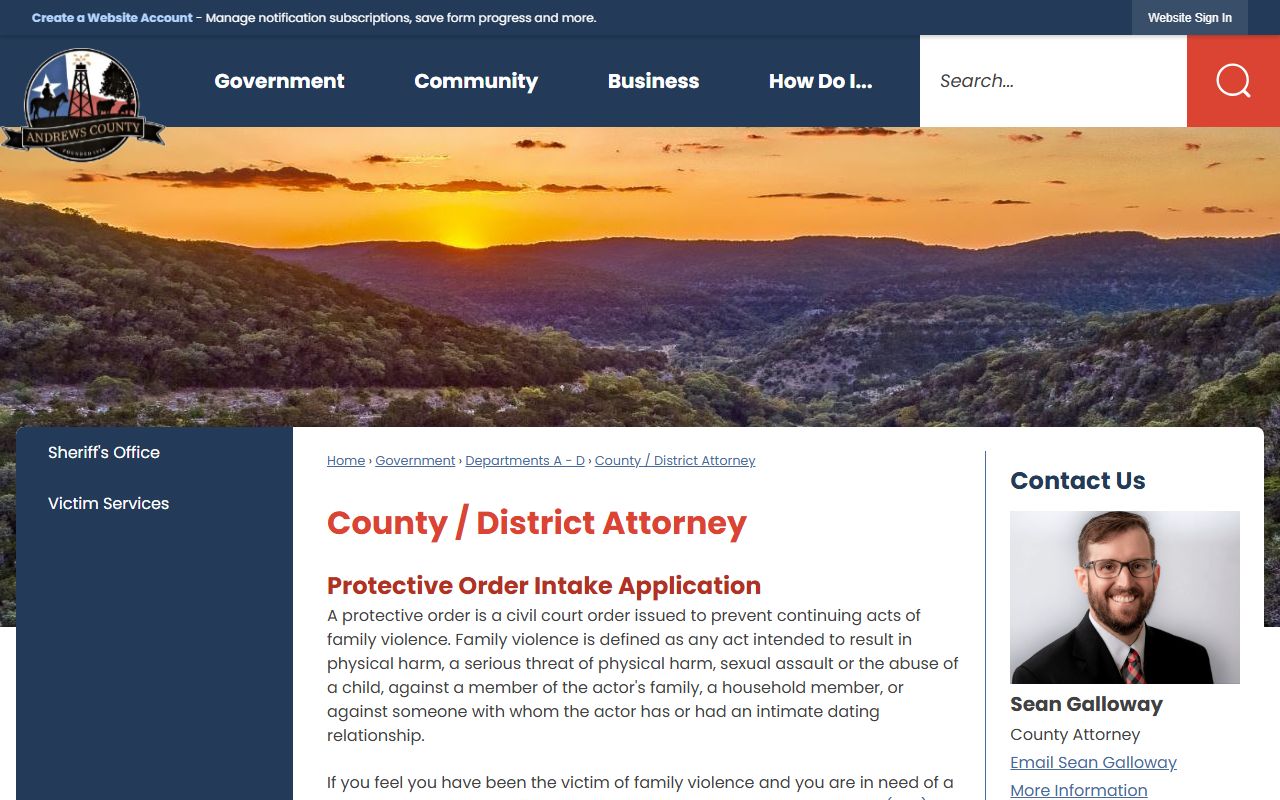
That office is relevant to court records after an arrest because prosecutor filing decisions determine whether a booking label becomes a formal charge, changes level, or is rejected before a court disposition exists.
Charging Documents After an Andrews County Arrest
A booking charge is not the same thing as a filed charging document. The booking entry usually reflects what the arresting agency or warrant supplied at intake. The court case begins when the required accusation is filed in the correct court. In Texas, Article 15.17 of the Code of Criminal Procedure also matters early in the process because an arrested person must be taken before a magistrate without unnecessary delay for warnings about the accusation, counsel, silence, and bail where allowed.
| Document | Who Uses It | Common Andrews County Context | What It Means for the Court Record |
|---|---|---|---|
| Complaint | Sworn complainant, officer, or prosecutor | May support an arrest, warrant, misdemeanor filing, or early prosecution step | Creates or supports the accusation that can move into a court case |
| Information | Prosecutor | Often used for misdemeanors and some waived-indictment contexts | States the formal charge the prosecutor is pursuing |
| Indictment | Grand jury | Used for felony prosecution when grand-jury action is required | Sets the felony charge that appears in the district-court record |
Class C citation matters and city warrants may follow a different municipal-court path. The City of Andrews Municipal Court handles Class C misdemeanor administration at 101 NW Ave A and publishes a separate warrant-information page. A municipal citation can lead to a warrant and later an arrest, but that still does not make the municipal page a county jail roster.
Charge Status in Court Records After Arrest
Charge status can change as court records after an arrest mature. A person may be booked under one label, then the prosecutor files a different charge, reduces a charge, adds a count, dismisses a count, or declines to proceed. Bond conditions, warrants, and holds can also affect custody even when the court case is moving separately from the jail record.
| Status | What It Means | What to Verify |
|---|---|---|
| Pending | The accusation has not reached a final disposition. | Check the clerk or court setting rather than treating the booking entry as final. |
| Filed | The prosecutor or grand jury has placed a formal charge in court. | Compare the filed charge with the jail booking label. |
| Amended / Reduced | The filed charge changed in wording, level, or count structure. | Read the latest docket entry or charging instrument. |
| Dismissed | The court case or charge ended without a conviction on that count. | Confirm whether dismissal affects all charges or only one count. |
| Nolle Prosequi | The prosecution is not proceeding on that charge. | Ask the clerk or prosecutor whether any related charge remains pending. |
| Convicted | A plea or verdict produced a judgment of guilt or other conviction entry. | Use the local court record and, for statewide conviction history, Texas DPS. |
Bond and Release After an Arrest
Texas bond is governed mainly by Code of Criminal Procedure Chapter 17, with the early first-appearance context in Article 15.17. In Andrews County, the researched county pages did not publish a jail bond-desk schedule, accepted payment methods, online bond-payment vendor, or bonding-company instructions. Current bond information should be verified by calling the jail or Sheriff's Office at 432-523-5545, checking any visible Tyler result, and then checking the appropriate court or clerk if a court order changed the conditions.
| Bond Type | How It Works |
|---|---|
| Cash Bond | A cash amount is posted to secure release and future appearance. |
| Surety Bond | A Texas-licensed bond agent posts bond under a fee and contract arrangement. |
| Personal Bond / PR Bond | The person is released on a promise to appear, subject to court-set conditions. |
| Property Bond | Real property may secure release if accepted under local court procedures. |
| No-Bond Hold | A warrant, court order, parole hold, immigration detainer, or other agency hold prevents ordinary bond release. |
A listed dollar bond does not always mean immediate release. A defendant may have a municipal warrant, a district-court hold, a parole or TDCJ issue, a federal hold, or an immigration detainer. The court record can explain the legal condition, while the jail record confirms whether Andrews County Jail is still holding the person.
Warrants That Lead to an Arrest
No official Andrews County Sheriff's Office active-warrant search form was located on the county sheriff page. The most specific official warrant source found was the City of Andrews Municipal Court warrant page. That page directs people to appear in person or contact Municipal Court during normal business hours at 432-524-2791, or City Hall at 432-523-4820 and press 3. Municipal Court is located at 101 NW Ave A, Andrews, TX 79714, with Monday through Thursday hours of 8:00 a.m. to 4:00 p.m. and a noon to 1:00 p.m. lunch closure.
The City of Andrews Municipal Court warrants page is useful for Class C warrant context, not for a countywide sheriff warrant database.
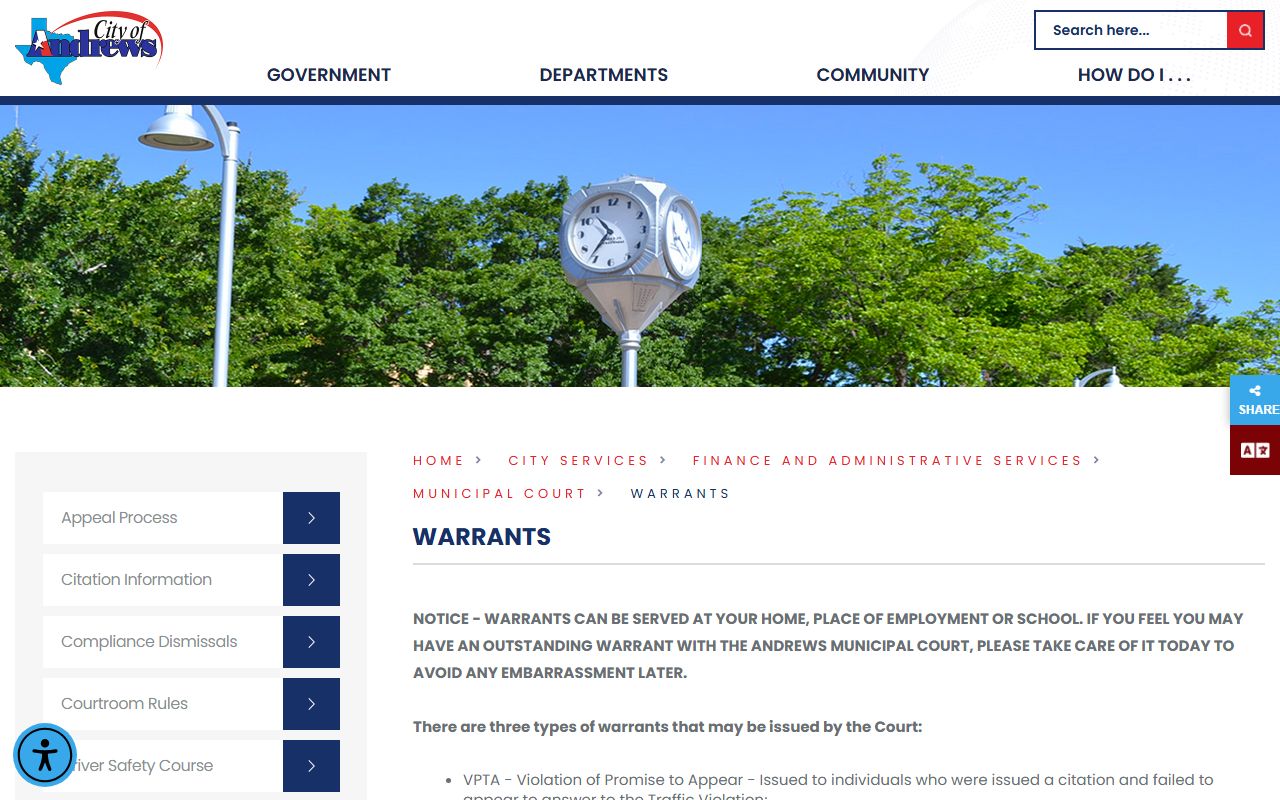
Once a warrant is executed and the person is booked, custody questions shift back to Andrews County Jail, the sheriff phone line, Tyler jail records, or the sheriff open-records request route.
Charges vs. Convictions
An arrest charge is an accusation, not a conviction. Court records after an arrest may be public while the case is pending, but the status should be read carefully. A pending charge can be dismissed, amended, reduced, or resolved by plea or verdict. Texas DPS conviction search can help locate conviction-history information, but it is not a substitute for a current Andrews County court file when the case is still pending.
| Charge | Conviction | |
|---|---|---|
| Stage | Accusation after arrest or filing | Final judgment, plea, or verdict outcome |
| What It Proves | That the government alleges an offense | That a court resolved guilt or accepted a qualifying plea |
| Where to Check | Jail record for booking label; court file for filed charge | Court judgment and statewide conviction-history sources |
| Can It Change? | Yes, it can be amended, reduced, added, dismissed, or rejected | Changes usually require later court action such as appeal, set-aside, expunction, or other remedy |
The Texas DPS Conviction Name Search is the statewide conviction-record route documented in the research.
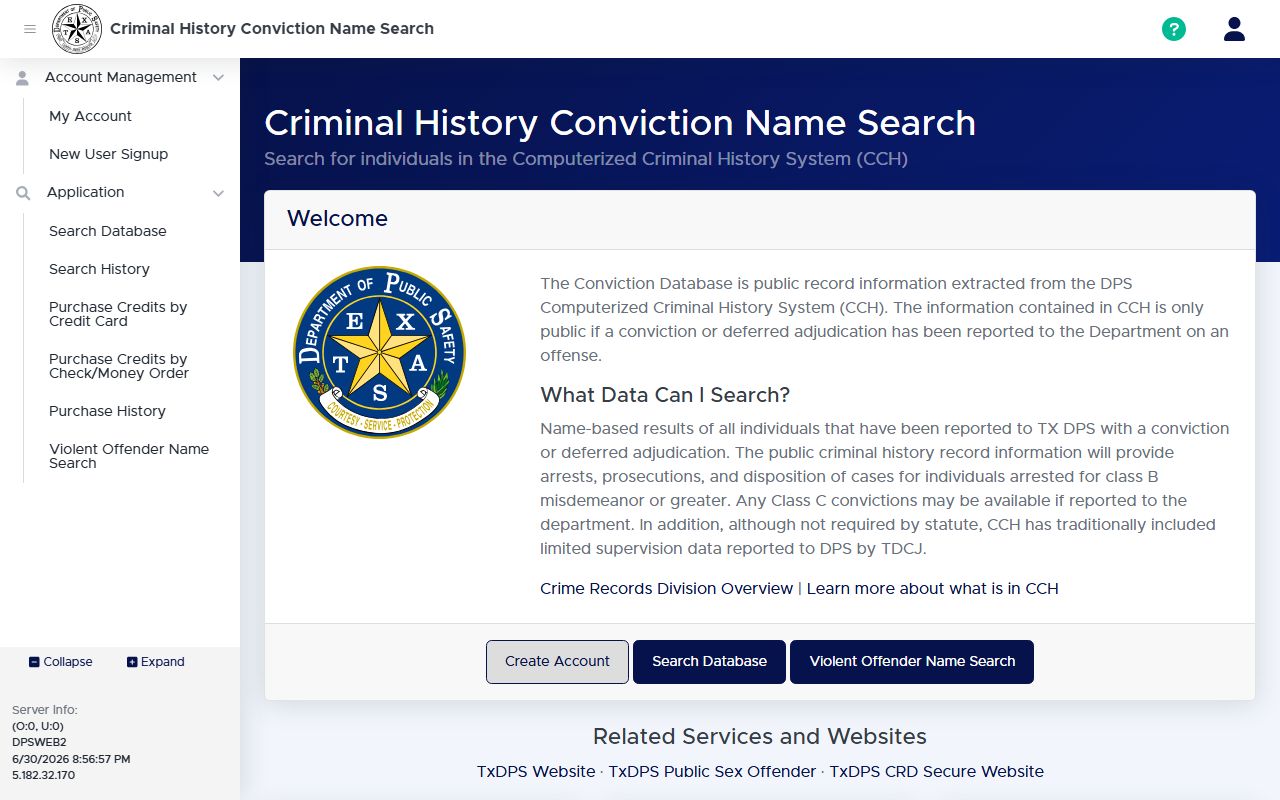
DPS conviction data helps with conviction history, while Andrews County court offices remain the better path for pending local charges and case-specific filings.
Sealed vs. Expunged Arrest Records
Texas uses different remedies for different records. Code of Criminal Procedure Chapter 55 governs expunction for qualifying arrests and records. Nondisclosure is a sealing-type remedy that limits public access to some criminal-history information, but it is not the same thing as physical destruction of records. Eligibility depends on the charge, disposition, waiting periods, prior history, and court order.
| Sealed / Nondisclosed | Expunged | |
|---|---|---|
| Public Visibility | Generally hidden from ordinary public access after a qualifying order | Removed or destroyed as directed by the expunction order |
| Government Access | Some criminal-justice or licensing access may remain depending on Texas law | Access is much more limited and controlled by the order |
| Typical Trigger | Qualifying nondisclosure disposition or statutory eligibility | Qualifying arrest, dismissal, acquittal, pardon, or other Chapter 55 path |
| Effect on Jail/Court Search | Public indexes may stop showing the covered record | Agencies subject to the order must remove or destroy covered records as required |
Background Check Considerations
Informal court-record lookups are different from regulated background checks. A court docket, jail entry, DPS conviction result, or public-information response can be incomplete, delayed, redacted, or limited to a specific agency's records. Employment, housing, credit, insurance, licensing, and similar screening uses can trigger federal and state rules that are outside ordinary public-record browsing.
Important: This site is not a consumer reporting agency and information here may not be used for FCRA-covered screening decisions.
Restricted Court Records After an Arrest in Andrews County
Texas Government Code Chapter 552 is the baseline Public Information Act route, but access is not unlimited. Section 552.029 addresses certain basic inmate information, while Section 552.108 can protect information tied to detection, investigation, or prosecution of crime. Juvenile information, medical details, security-sensitive jail information, confidential victim details, sealed records, expunged records, and active investigation material may be withheld or redacted.
The Andrews County District Clerk page gives the local district-court record route and contact information.
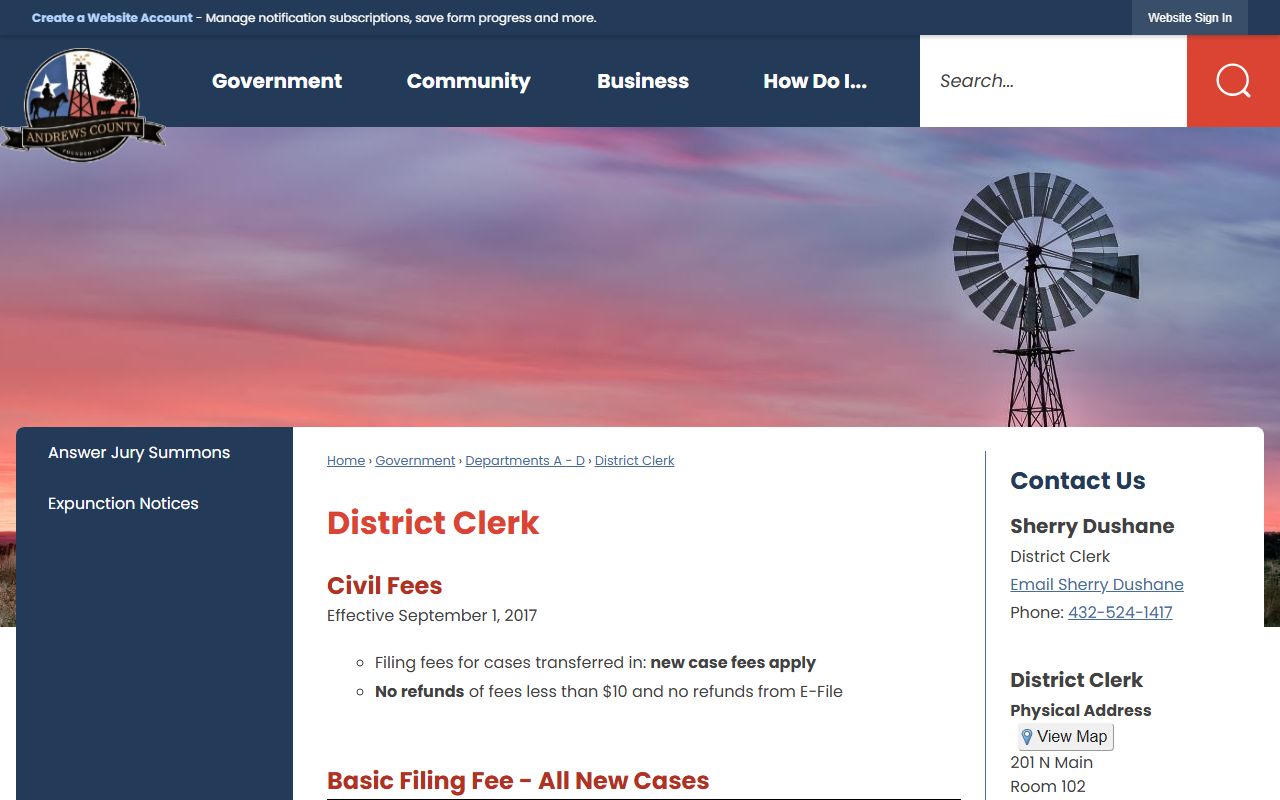
When the online Tyler environment does not show a usable case record, the District Clerk contact is the practical route for district and felony case-record questions.